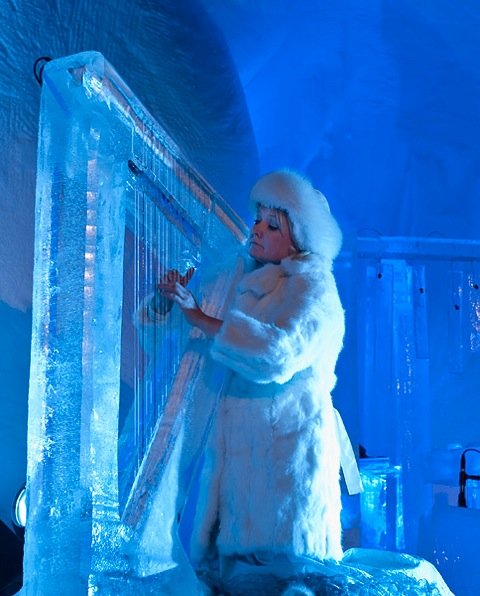
The Story of the Ice Harp
Terje Isungset – the inventor of ice music
Terje Isungset is a Norwegian percussionist, composer, and percussionist, and a pioneer in using natural materials in music. As an extension of his interest in creating sound from natural elements, the musical concept of ice music was born.
Since 1999, he has explored music performed on instruments made from ice and developed the unique concept of ice music. Through experimentation with different types of ice—both acoustic and amplified—he developed techniques that allowed the ice to “sing.” As early as 2000, he was commissioned to create and perform the world’s first ice music concert inside a frozen waterfall in Lillehammer.

Ice Music with String Instruments
The reason for including string instruments in the project was to expand the musical expression. Bengt Carling from Sweden helped build the instruments in the early years, including a four-string harp that functioned as a hybrid “harp–isophone.”
Ice Music Festival
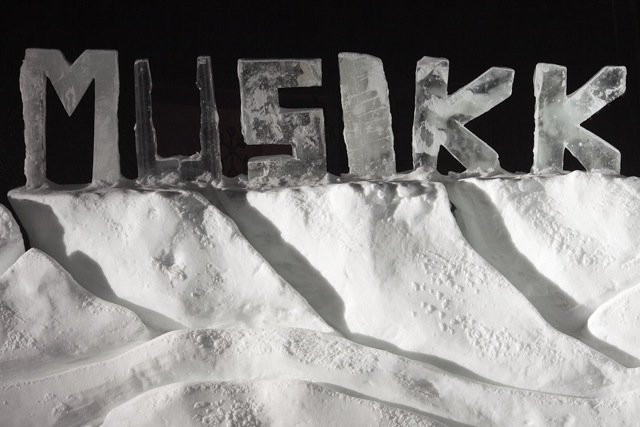
In 2005, Terje founded the Ice Music Festival in Geilo, which for several years was held annually around the first full moon of the year. Later the festival moved to different locations, including Ål, Greenland, and Oslo.
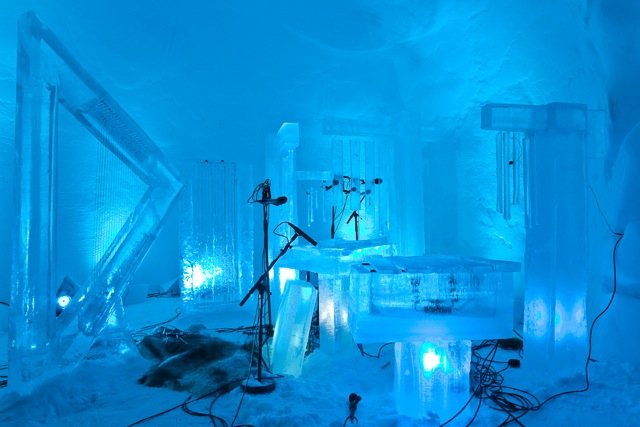
The music is performed outdoors in biting cold, in spectacular surroundings such as ice stages and ice igloos. The festival has attracted musicians and audiences from all over the world. Terje’s work with ice instruments is documented on the website Icemusic.no and he has released more than ten ice-music albums.

The First Ice Harps (2007–2011)
In 2007, Terje attempted to make an ice harp where the strings were also made of ice. The instrument functioned more like a percussion instrument, and tuning proved extremely difficult.
In 2008, he contacted me with an exciting idea:
Could we develop the world’s first ice harp together for the 2009 festival?
The goal was to build a harp made entirely of ice, but with real harp strings. It quickly became clear that attaching strings directly to pure ice was impossible, so we had to find alternative solutions.
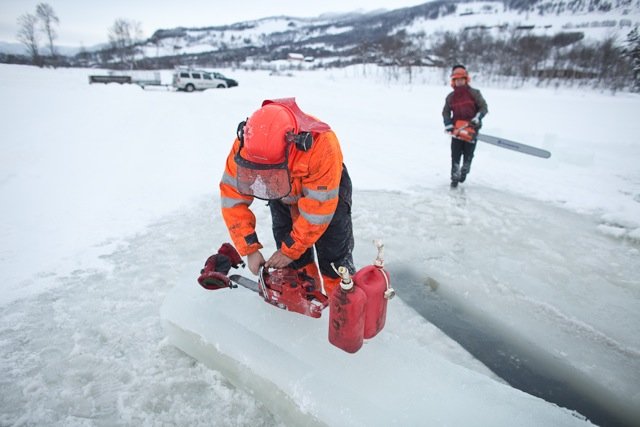
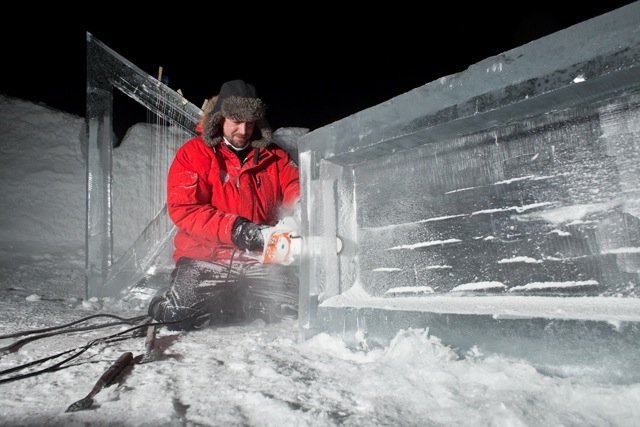
The American ice-carving expert Bill Covitz carved the ice blocks and shaped the harp.
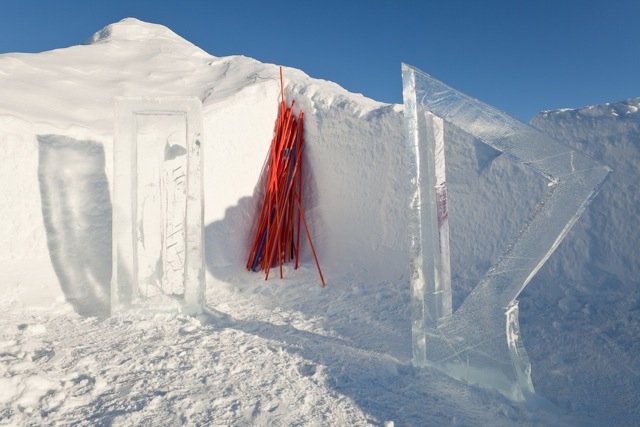
Together with engineer and architect Helder Neves, we experimented until we found a solution: a triangular ice harp.
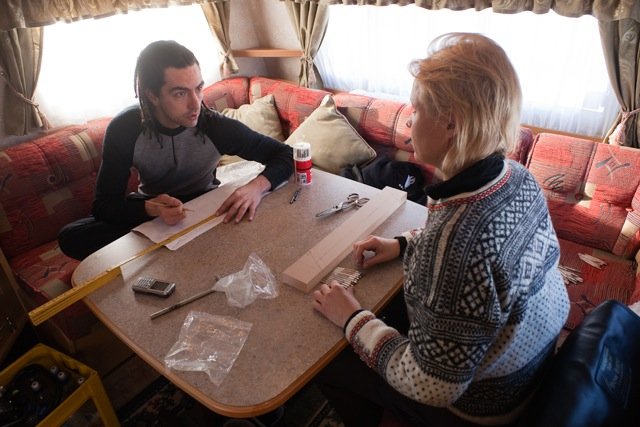
A small wooden plank was cast into the top of the ice block, where original harp tuning pins were attached. Another plank with smaller holes was embedded at the bottom so the strings could be fastened in the same way as on a traditional harp.
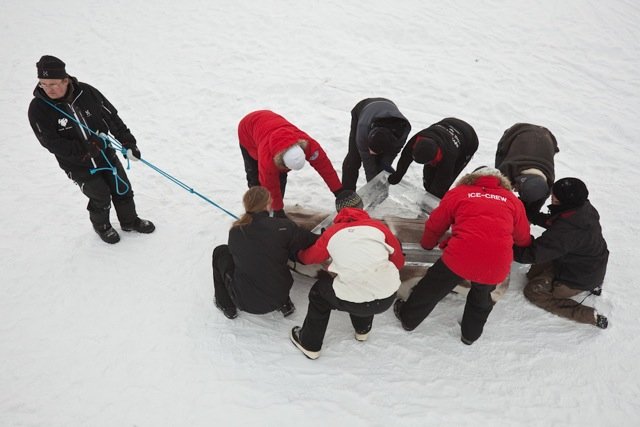
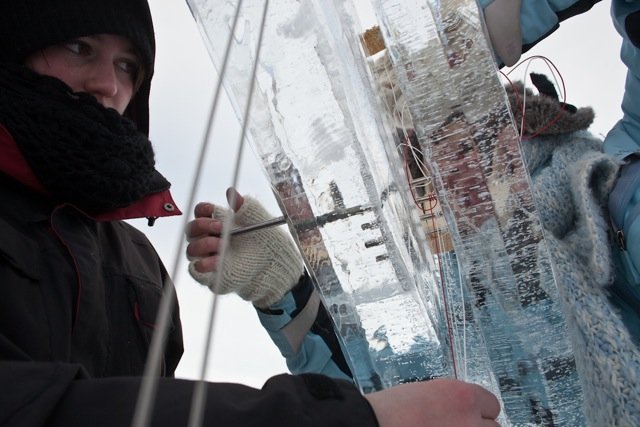
All work had to be done outdoors, and the process was extremely demanding—both physically and mentally. Planning, testing, building, shaping the harp, and installing 30–35 strings in freezing winds took five to six days of continuous work.
Because of the cold, I had to be extremely careful tightening the strings, as they could easily break if tuned normally. I mounted them with low tension and gradually tightened them.
Only a few minutes before the opening concert—and before the first harp note was to be played—the final string was installed. I decided to attempt tuning the instrument roughly a fifth lower than normal, and until that moment I didn’t actually know how it would sound.
I simply had to jump in and create something on the spot.
New Ice Harps (2010)
In 2010, I was invited back, and this time we built three different ice harps:
- one triangular harp
- one round ice harp
- one large rectangular bass harp with wire strings
This allowed us to explore different sound registers. The triangular harp worked very well, and the bass harp produced a few, deep, beautiful tones that were truly impressive.
During the recording of Winter Songs, in which the wind plays the harp strings, I had to sit outside in a storm because the ice harp was too large to fit inside the igloo.
Concert Inside a Glacier (2011)
In 2011 we traveled to Val Senales, in Italy, where we performed inside a glacier more than 3,000 meters above sea level.
The concert space was a dome-shaped chamber made of ice—completely unique and an adventure in itself.
2014 – A Lesson Learned
In 2014, I was invited back to the ice festival and we wanted to develop the ice harp further.
The biggest problem with the triangular harp was that the strings in the middle register often broke. Our goal became to build a larger, curved harp inspired by a full-size 47-string concert harp.
We created a plexiglass structure, following the form of a pedal harp, which was cast into the ice. Visually, the instrument was spectacular.
At first, I played a concert with relatively loose strings.
The next day I was scheduled to perform a solo piece. We decided to tune the strings tighter. Slowly and carefully I tuned the harp while the ice experts assured us the construction could handle the tension.
The sound was magical—a beautiful, full harp sound with an unforgettable icy tone. I was thrilled and looked forward to playing my solo.
But just before the concert began, disaster struck:
The ice—and the harp—exploded.
Fortunately, no one was standing nearby, which could have been extremely dangerous. The beautiful harp shattered into thousands of pieces, and the performance had to be canceled. We were all in shock, but relieved that no one was hurt.
A Temporary Solution
The next day we quickly built a small triangular harp using the planks and tuning pins from earlier years, allowing me to participate in the remaining concerts at the festival.
This event taught us an important lesson:
The forces of nature cannot be controlled, and ice alone cannot carry full string tension.
The Modern Ice Harp – The Plexiglass Solution
To gain better control over natural forces, string tension, tuning, and safety, we developed a solution with a full plexiglass body cast into ice. The design is based on a harp similar to a Lyon & Healy Silhouette harp.
This solution makes it possible to:
- take the ice harp on tour
- achieve stable tuning and controlled string tension
- ensure safety for musicians and audiences
- preserve the aesthetics and magic of ice
The plexiglass harp is embedded in an ice body, and the sound is amplified through vibrations in the ice, strings, and structure. In this way, the harp blends beautifully with Terje’s other ice instruments—bass, percussion, and horns.
The sound of the ice harp is truly unique and resonates beautifully with the rest of the ice ensemble.
Reflections and Vision
This project demonstrates how temporary, yet magical, music on ice can be. The instruments melt, but the music continues to live on through the experience.
Terje’s work combines art, music, and climate awareness, inviting both musicians and audiences to reflect on nature and our relationship with it.
The baton for the ice harp project has now been passed to Julie Rokseth, as the work eventually became too demanding to combine with my full-time position in the Norwegian Radio Orchestra.